
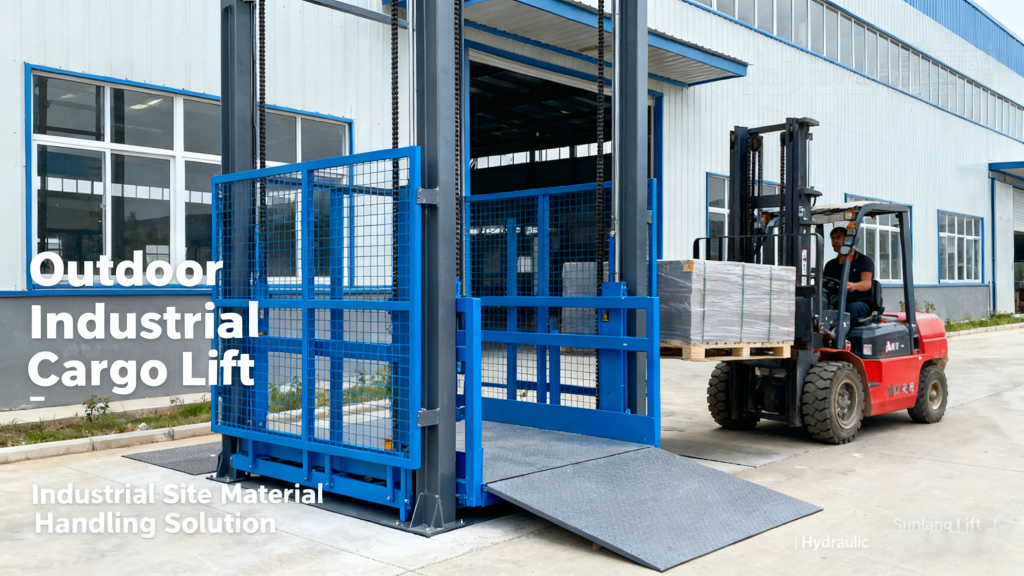
When managing material handling in outdoor warehouses, factories, or distribution centers, choosing the right outdoor industrial cargo lift is critical. Outdoor lifts face environmental challenges such as rain, dust, and corrosion, so selecting the right hydraulic lift, pit option, and platform design ensures safe, efficient operations. In this article, we will cover hydraulic lift types, pit vs pitless designs, safety features, platform customization, and maintenance for long-term reliability.
Why Outdoor Industrial Cargo Lifts Are Essential
Unlike indoor lifts, outdoor cargo lifts must handle exposure to harsh weather while supporting forklifts, pallet jacks, and heavy loads. Using a hydraulic cargo lift outdoors provides:
- Stable lifting for heavy goods
- Safe forklift or pallet jack loading/unloading
- Customizable platforms and lifting heights
For industrial clients, outdoor cargo lifts improve material handling efficiency by 10–20% while reducing accidents and equipment wear.
Hydraulic Lifts for Outdoor Use
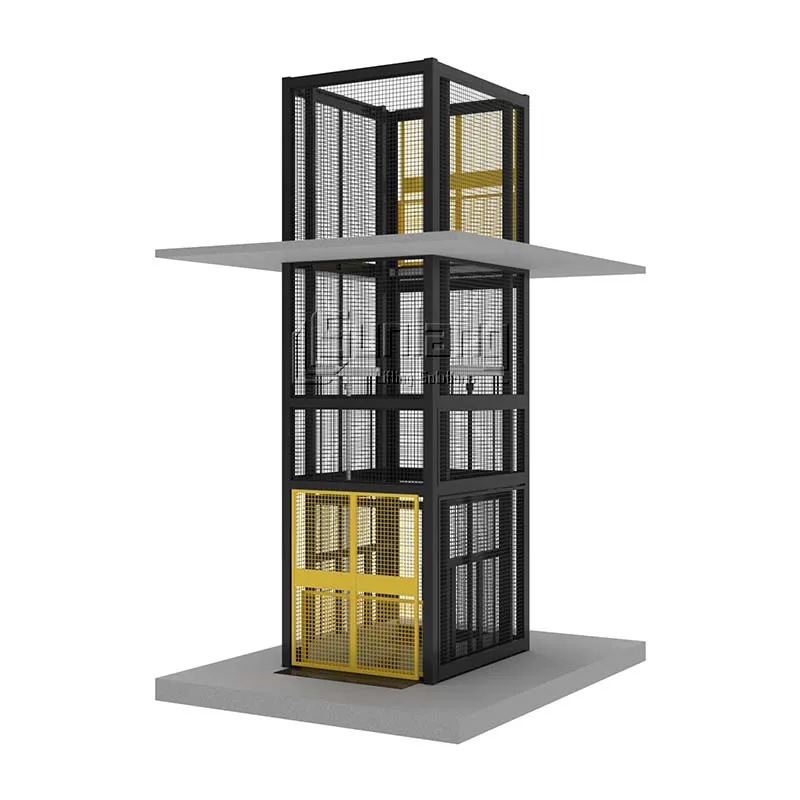
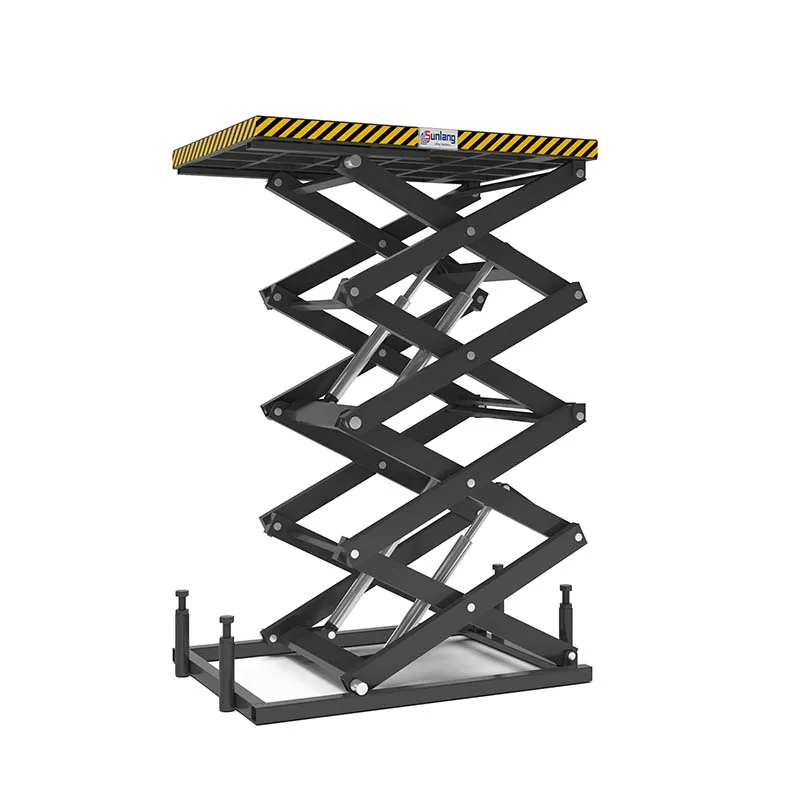
Hydraulic cargo lifts are widely used outdoors because of their high load capacity and platform flexibility. Key considerations include:
- Guide-Rail Design
Ensures vertical stability and prevents sway during loading. Ideal for forklifts and pallet jacks. - Load Capacity
Select a lift rated for the heaviest load, accounting for dynamic forces. Many outdoor models support 5,000–20,000 lbs. - Lifting Height
Choose a height that matches your mezzanine floors or dock levels. Hydraulic systems offer smooth, controlled motion for heavy cargo.
Example: A logistics company upgraded to a hydraulic outdoor cargo lift with guide rails. Forklifts loaded pallets faster and safely, and downtime dropped by 15%.
Pit-Mounted vs Pitless Lifts
One of the first decisions is whether to use a pit-mounted or pitless design:
- Pit-Mounted (Flush-to-Floor)
- Platform sits level with surrounding floor for easy forklift and pallet jack access.
- Requires excavation and proper drainage to prevent corrosion.
- Best for high-throughput warehouses with conveyors or frequent manual handling.
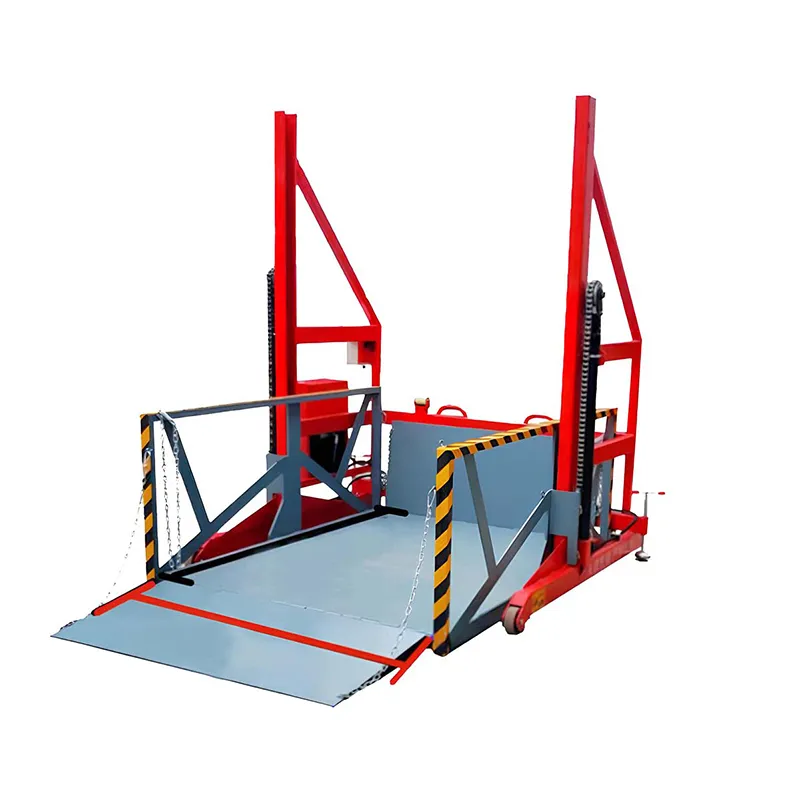
- Pitless (Ground-Mounted)
- Easier installation with minimal civil work.
- Ramp slope must be carefully calculated for safe forklift access.
- Ideal for retrofit sites or locations where excavation is difficult.
Practical tip: For manual pallet jacks or conveyor integration, pit-mounted lifts offer better ergonomics and efficiency. For fast installation or lower upfront costs, pitless lifts are a reliable alternative.
Safety Features for Outdoor Cargo Lifts
Safety is crucial for outdoor operations. Modern industrial cargo lifts include:
- Overload Protection: Prevents lifting beyond safe capacity.
- Anti-Drop Devices: Stops platform in case of hydraulic failure.
- Guard-Rail Enclosures: Protects operators and prevents cargo spillage.
- Non-Slip Platforms: Steel decks with anti-skid texture ensure safe movement even in wet conditions.
Example: A distribution center added anti-drop and overload sensors to their outdoor lift. Accidents decreased by 40% in the first year.
Platform Size and Customization
Platform design affects both safety and efficiency:
- Dimensions: Must accommodate forklifts and pallet sizes. Standard pallets (40×48 inches) require at least 48 inches clear width.
- Turning Space: Allocate 6–10 feet for approach and maneuvering.
- Edge Protection: Install bumpers, wheel stops, or guide rails.
- Reinforced Steel Decking: Handles concentrated wheel loads and heavy-duty use.
Example: A warehouse handling oversized cargo used custom 96-inch-wide platforms. This allowed two pallets at once, reducing handling time by 30%.
Environmental Protection and Durability
Outdoor lifts must resist weather, dust, and corrosive elements:
- Galvanized or coated steel structures extend life.
- Sealed hydraulic components prevent contamination.
- Pit drainage and waterproof membranes protect structural and mechanical elements.
Example: A factory in a coastal area coated their lift frame with corrosion-resistant paint. After 3 years of rain and salt exposure, the lift remained fully operational without rust.
Modular and Mobile Options
For sites with limited space or temporary needs:
- Modular Lifts: Easier shipping, assembly, and installation.
- Semi-Mobile Lifts: Can be relocated for seasonal or project-based operations.
Example: An exporter installed modular outdoor cargo lifts on an overseas site. The units shipped in sections, were assembled in 2 days, and immediately operational.
Maintenance for Longevity
Preventive maintenance is essential:
- Monthly: Check hydraulic hoses, leveling, and debris.
- Quarterly: Calibrate safety sensors and inspect platform surfaces.
- Annually: Replace hydraulic oil, repaint metal, test anti-drop and overload devices.
Proper maintenance ensures smooth operation for over a decade.
Conclusion
Choosing the right outdoor industrial cargo lift requires balancing:
- Hydraulic lift design and guide-rails
- Pit-mounted or pitless installation
- Safety features and platform design
- Corrosion resistance and environmental protection
- Modular vs permanent solutions
When planned carefully, outdoor cargo lifts improve efficiency, protect goods and operators, and offer reliable service for years.
Contact Sunlang Lift
Email: service@sunlanglift.com
Website: https://sunlanglift.com
